How to Improve Print Inspection for Higher Quality Results?
In the world of printing, quality is paramount. Print Inspection plays a vital role in ensuring that final products meet high standards. "A perfect print is a myth," says Johnathan Mills, a leading expert in print inspection. This assertion underscores the challenges in achieving flawless results. Even with advanced technology, imperfections can creep in, leading to costly reprints.
Print inspection involves a meticulous review of printed materials. It checks for color accuracy, alignment, and consistency. Each of these factors contributes to the overall quality. Some industries might struggle to maintain these standards. Human error can occur frequently, leading to overlooked defects. A robust inspection process can help mitigate these issues.
Investing in better print inspection technology is essential. This can enhance accuracy and speed up the quality control process. However, it's crucial to remember that technology alone cannot guarantee perfection. Continuous training and adaptation are necessary to keep up with evolving standards. As Mills points out, striving for improvement is a never-ending journey in the print industry.
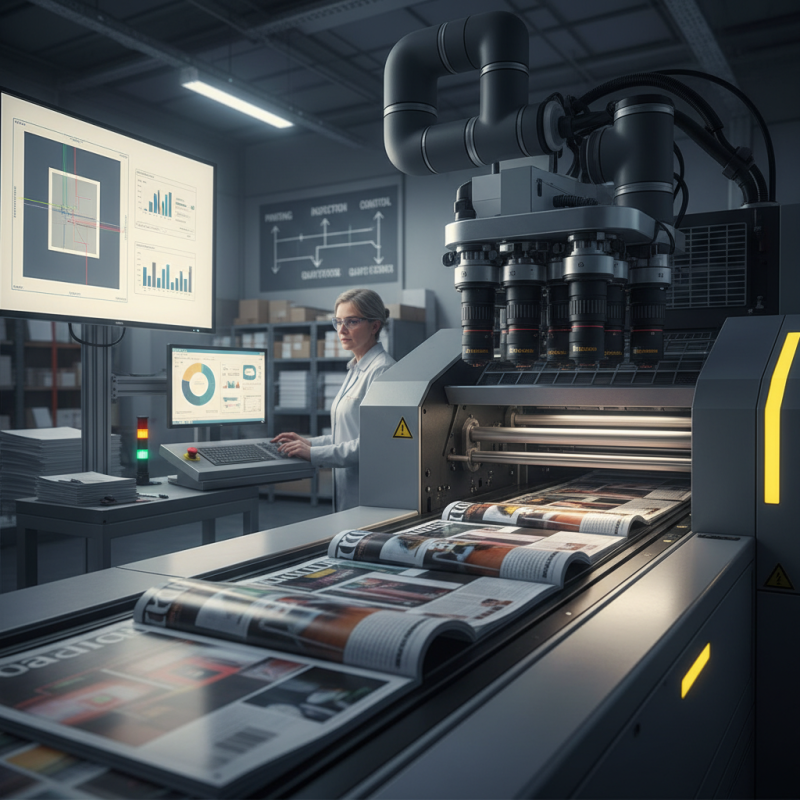
Understanding the Importance of Print Inspection in Quality Control
Print inspection plays a crucial role in quality control. It's about ensuring that every product meets the desired standards. A recent industry report shows that 64% of companies face challenges with print defects. This leads to increased costs and loss of customer trust. Each error translates to wasted materials and time.
Quality inspection helps catch these defects early. Systems that automate this process can improve detection rates by up to 30%. Yet, many businesses still rely on manual checks. This method is prone to human error. Studies indicate that about 15% of defects may go unnoticed. The consequences can be severe, impacting customer satisfaction and damaging brand reputation.
Incorporating advanced technologies can enhance print quality. These tools provide real-time feedback and detailed analytics. However, implementing new systems isn’t without challenges. Employees need training, and the technology can be costly. Companies must weigh the initial investment against long-term savings. Balancing quality and efficiency remains a constant struggle.
How to Improve Print Inspection for Higher Quality Results? - Understanding the Importance of Print Inspection in Quality Control
| Inspection Parameter | Description | Measurement Method | Target Values | Current Performance |
| Color Consistency | Ensuring colors match specified values across print runs | Spectrophotometry | ΔE < 1 | ΔE 2.5 |
| Registration Accuracy | Alignment of print layers (e.g., CMYK) | Digital Alignment Tools | ±0.5 mm | ±1.2 mm |
| Ink Density | Measurement of ink thickness on print | Densitometer | 1.40 - 1.60 | 1.25 |
| Print Defects | Detection of errors, such as spots and lines | Visual Inspection, Automated Systems | < 1% | 3% |
| Surface Quality | Assessment of the smoothness and finish of printed materials | Tactile and Visual Assessment | Grade A | Grade B |
Identifying Common Print Defects and Their Causes
Print quality is crucial in any production process. Common print defects can lead to customer dissatisfaction. Identifying these defects is essential for improvement. Smudging is a frequent issue. It often arises from excessive ink or improper drying. This defect can ruin the overall appearance of the print.
Another common problem is misregistration. This occurs when colors do not align correctly. It can happen due to mechanical issues or poor calibration. A print might appear blurred or unclear as a result. Over time, a lack of attention to detail can lead to this defect. Regular checks and maintenance are necessary to prevent it.
Moreover, color inconsistencies can be troubling. Variations in shade can occur due to various factors, such as ink quality or environmental conditions. If the color shifts from batch to batch, it can create a lack of cohesion in printed materials. Careful monitoring and testing of inks can help mitigate these issues. Each of these defects requires thoughtful reflection and corrective measures to enhance print quality.
Print Defect Analysis
This chart illustrates the common print defects identified during quality inspection along with their frequencies. Understanding these defects is essential for improving print quality.
Implementing Advanced Inspection Technologies for Better Accuracy
Advanced inspection technologies play a crucial role in improving print quality. Industry reports indicate that investments in automated inspection systems can reduce errors by up to 50%. These systems often rely on high-resolution cameras and AI algorithms to detect issues that manual inspections might miss. For instance, tiny print defects can lead to significant quality issues down the line.
However, simply adopting new technology does not guarantee better results. It's essential to ensure that the integration of these systems is seamless. A study revealed that 30% of companies experienced initial setbacks when implementing new inspection tech. Training personnel and adjusting workflows are vital. Without proper adoption, even the best equipment may underperform.
Additionally, continuous monitoring and data analysis are needed to refine processes. Data suggests that organizations that utilize real-time analytics can improve inspection accuracy by 20%. Yet, many companies overlook this aspect. They may have advanced tools but fail to analyze the data effectively. This oversight can lead to missed opportunities for quality enhancement. There’s always room for improvement.
Establishing Standard Operating Procedures for Consistent Inspection
Establishing standard operating procedures (SOPs) is crucial for print inspection. Consistent inspection processes can significantly boost product quality. According to industry reports, up to 30% of printing defects could be avoided with well-defined SOPs. These procedures help align team efforts and reduce human error during inspections.
Training staff is a key aspect of implementing SOPs. Regular training sessions ensure that all employees understand the inspection criteria. A 2022 study found that trained employees are 45% more likely to identify defects early. If training is inconsistent or ineffective, errors can slip through the inspection process. This makes continuous evaluation essential.
Incorporating technology into inspection processes can enhance results. Automated systems can help detect flaws faster. However, relying solely on machines can create blind spots. A balance between human and machine inspection is vital. By critically assessing both approaches, organizations can refine their procedures for better outcomes. Regular audits of the SOPs also help in capturing areas that need improvement.
Training Staff on Best Practices for Effective Print Inspection
Effective print inspection hinges on well-trained staff. A recent industry report indicates that 70% of print defects arise from human error. This sheds light on the need for comprehensive training programs. Proper training can significantly reduce errors and improve product quality, leading to higher customer satisfaction.
Training should focus on best practices. Staff should learn to identify common defects, such as color shifts or alignment issues. Using visual aids, like charts or sample prints, enhances understanding. Frequent hands-on practice allows employees to engage actively. Implementing regular assessments can track progress, ensuring skills are sharpened.
Despite best efforts, lapses can still occur. Not all inspectors can spot subtle flaws. It's crucial to create a culture where feedback is welcomed. Regularly discussing challenges fosters a learning environment. By refining training based on real inspection scenarios, teams can continually adapt and improve their inspection processes.
 Innotex Group