How to Choose the Right Bulk Sack in 2026?
Choosing the right Bulk Sack in 2026 requires more than comparing prices or printed dimensions. The safest choice begins with the material, filling weight, discharge method, and storage environment. A sack handling dry powder may need a tighter fabric weave than one carrying coarse granules. Moisture-sensitive products may require a polyethylene liner. Static-sensitive workplaces need suitable conductive or antistatic designs.
Start with the safe working load and safety factor shown in the supplier’s technical documentation. Confirm whether the sack includes four lifting loops, a coated body, sift-proof seams, or a top and bottom designed for your equipment. Small details matter. A discharge spout that fits poorly can slow production and create avoidable dust. In a busy warehouse, damaged loops or unclear labels can become serious operational concerns.
Reliable suppliers should provide test records, traceability, material information, and clear handling instructions. Their recommendations should match your actual filling line, pallet dimensions, forklift process, and storage period. A useful evaluation includes a controlled trial before full-volume purchasing. Check how the sack behaves during filling, stacking, transport, and discharge.
There is no universal Bulk Sack.
A clean specification sheet can still hide practical problems. Some buyers focus on capacity and overlook humidity, abrasion, or repeated handling. That mistake is understandable, but costly. Review performance with operators, warehouse staff, and quality teams. Their observations may challenge the original specification. In 2026, the best decision balances safety, product protection, efficiency, documentation, and realistic site conditions. Never choose only by appearance.
Define Your Bulk Sack Requirements
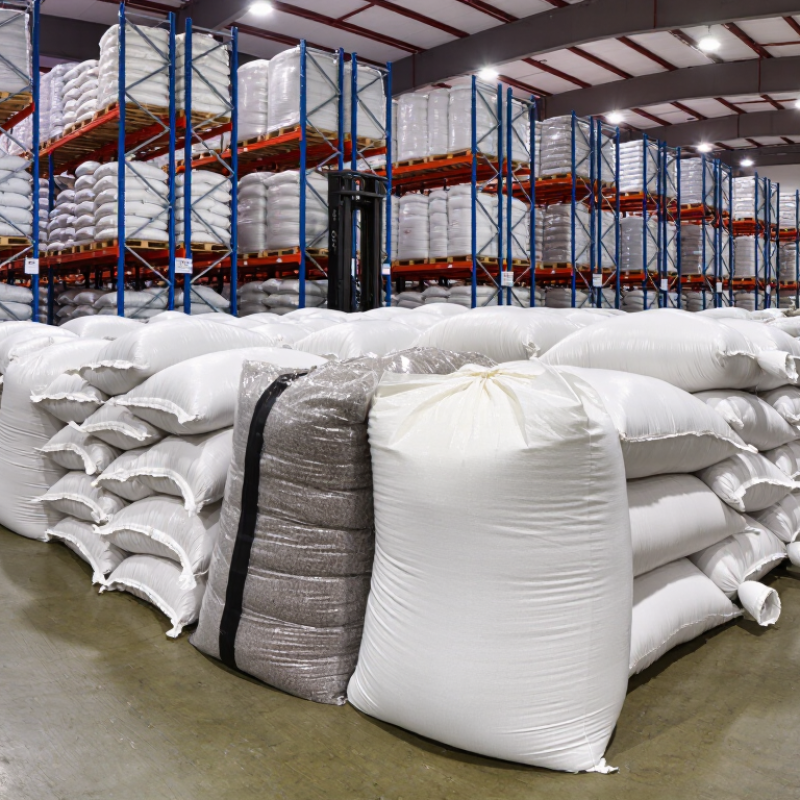
Before choosing a bulk sack, define what it must carry and how it will be handled. Start with the product’s weight, density, particle size, moisture level, and flow behavior. A fine powder may need a sift-proof construction. A damp material may require a suitable liner. Small details matter.
Set the required safe working load, sack dimensions, filling method, discharge style, and lifting arrangement. Consider whether workers will use forklifts, lifting frames, or crane hooks. Check the warehouse ceiling, pallet size, stacking height, and transport conditions. A sack designed for one-way delivery may not suit repeated handling. Do not guess the capacity from volume alone.
I have seen projects fail because the sack fit the product but not the equipment. Measure the filling nozzle and discharge outlet carefully. Request samples before approving production. Test seams, loops, closures, and liner fit under realistic conditions. Review inspection records, material specifications, and traceability documents. Where static control is relevant, ask qualified specialists to define the correct construction and handling procedures.
The first specification is rarely perfect. Leave room for revision after a trial run. Note dust leakage, awkward lifting, slow discharge, or poor stacking. These observations often reveal requirements that paperwork misses. A clear requirement sheet makes supplier discussions more precise and helps prevent costly changes later.
Evaluate Suppliers, Costs, and Long-Term Value
Choosing a bulk sack in 2026 requires more than comparing unit prices. Ask suppliers for test certificates, production samples, and traceable batch records. ISO 21898 specifies performance requirements for flexible intermediate bulk containers handling non-dangerous goods. Confirm the sack’s safe working load, safety factor, fabric strength, seam quality, and discharge design.
A low quotation may hide costly failures. Request pricing for the complete system, including liners, pallets, filling, unloading, storage, and transport. Calculate the cost per successful delivery, not the cost per sack. Review lead times, minimum order quantities, inspection procedures, and replacement policies. A supplier with clear corrective-action records is usually more valuable than one offering the fastest discount. Still, supplier promises need verification.
Long-term value also includes waste, reuse, and product protection. The OECD Global Plastics Outlook projects global plastic waste will rise from 353 million tonnes in 2019 to 1.014 billion tonnes by 2060. Select designs that reduce empty weight without weakening handling performance. Ask whether components can be separated, recovered, or recycled in your operating region. Do not assume “reusable” means unlimited reuse. Inspect every sack before filling, and document damage, moisture exposure, and lifting history. Small failures become expensive when thousands of units move through the supply chain.
 Innotex Group